
We make sure that our planting method is adaptable and bespoke – there is no such thing as a perfect site, and we would always rather put trees in the ground where space permits.

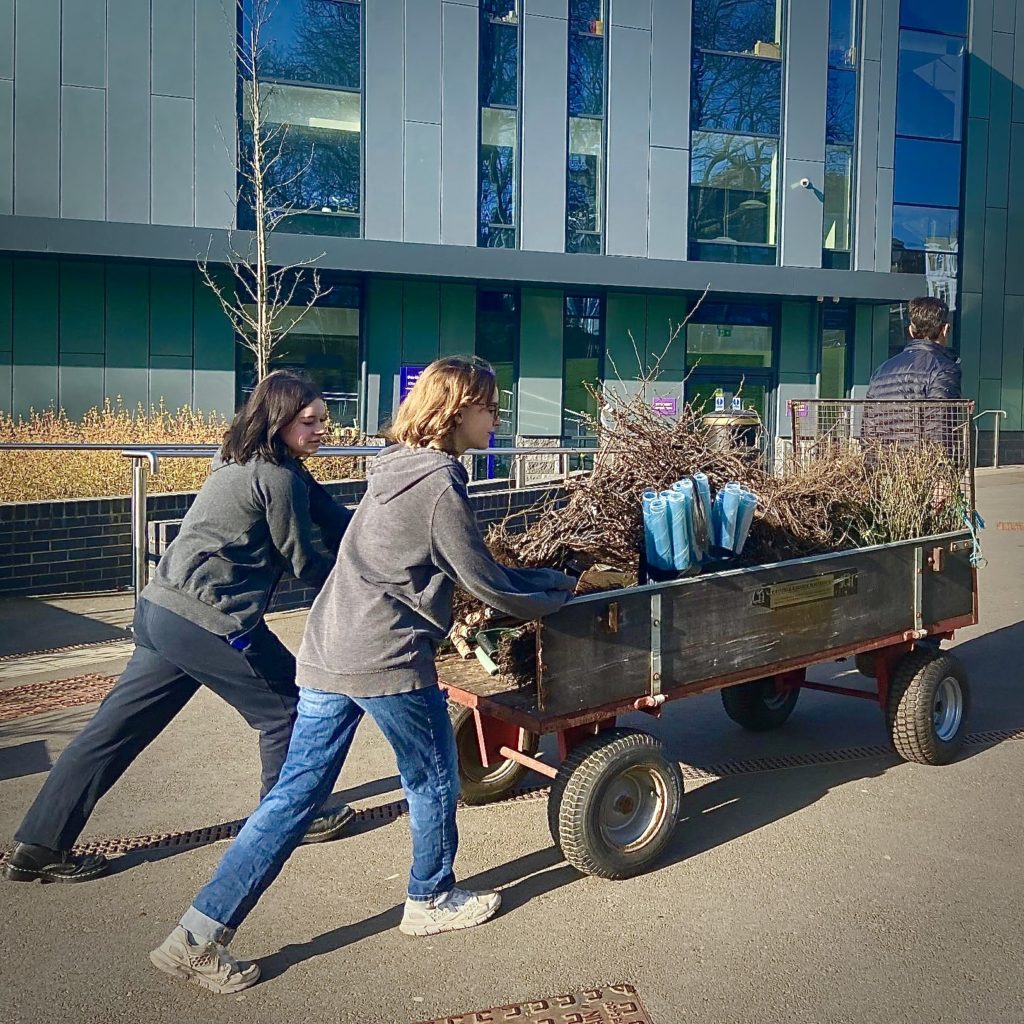
Not every site offers a tennis-court sized plot of land. A Miyawaki hedgerow applies the same principles in a linear form. Narrower than a forest, but still dense enough to screen off noise and pollution, these hedgerows restore lost wild habitat corridors.
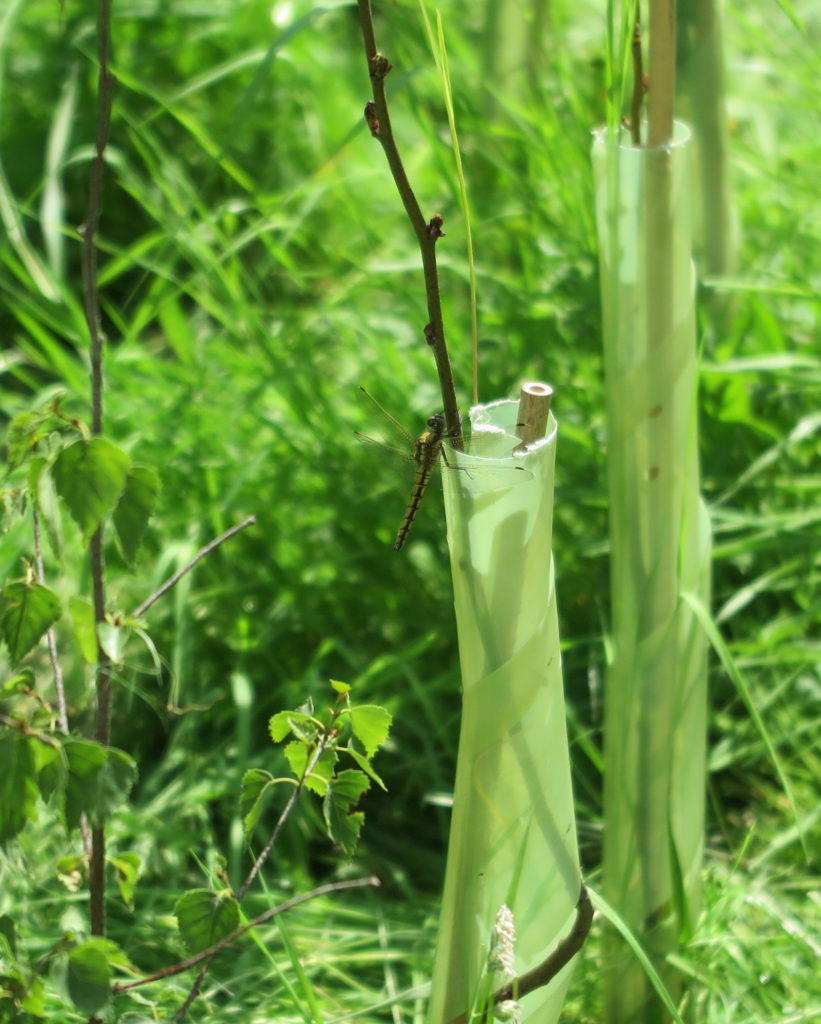
We make sure that selecting the species of our trees is the foundation of a planting. Every tree we plant is native to the UK and selected to match those that would naturally grow on the chosen site, with consideration given to its soil, elevation and aspect. Native tree species support native insects, which in turn support native birds. Within a few years of being planted, a forest of 18 native species planted on a school field will create a wonderfully rich eco-system above and below ground.
Donate, pledge land or volunteer, there are many ways to help Dream For Trees. Drop us a note, we’ll be pleased to hear from you.
The UK government has committed to net zero by 2050 and to restoring nature across 30% of land by 2030. Urban tree cover is central to both. Dense, native woodland in cities delivers measurable gains in carbon, biodiversity, air quality, and flood resilience – where they’re needed most.
Government planting targets consistently fall short. The land most in need – small urban plots, school grounds, degraded suburban spaces – is exactly where conventional forestry doesn’t reach. The Miyawaki method was designed for these sites. Dream for Trees exists to plant them.
In 2024, Natural England and the Local Government Association published the first UK government trial of Miyawaki planting across 16 urban sites. Survival rates of 79% against 47% with conventional methods confirmed what the method’s advocates had argued: it works where standard planting fails.
Natural England blog, September 2024
Tree Council report “Urban Tree Establishment A Trees / Outside Woodlands project report” (2024)