The Woodland Trust’s own research shows that the least deprived urban neighbourhoods in the UK have more than double the tree cover of the most deprived. Thornton Grove sits at that intersection: a community that needs trees most, and has the fewest.
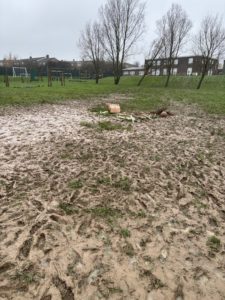
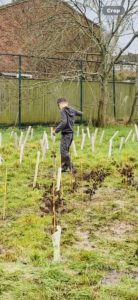
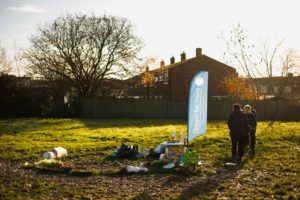
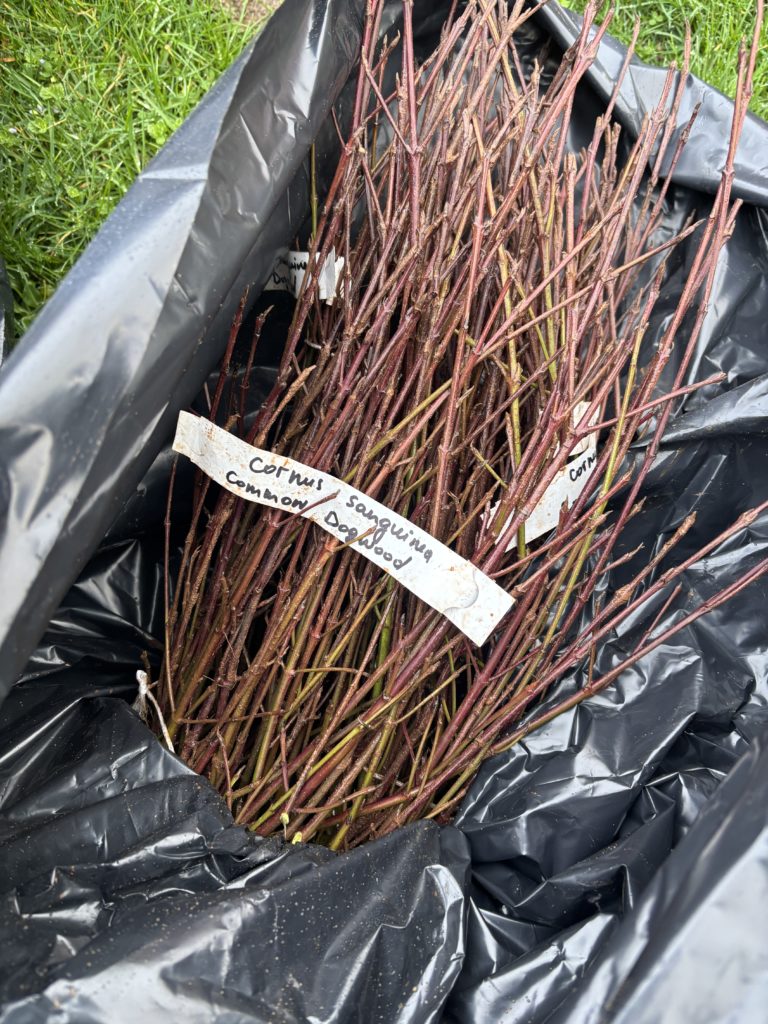
Dream For Trees director Kate Shanahan marked out the 50 x 50 meter site of the raised platform classroom before the rain arrived. Everyone worked through the rain, the soft mud making planting easy. Marsh-tolerant native species were selected for this site, many such as Willow are particularly fast-growing.
Wild Service trees were part of the species list for this site. So called because its berries were historically sold as a spice; “service” derives from Sorbus, the Latin genus name, and the fruit was once traded in markets as a flavouring before black pepper became widely available. It is also an indicator species: Wild Service only colonises land that has been continuously wooded since ancient times, and its presence is used by ecologists to identify ancient woodland. It is rarely seen in new planting schemes, as it resists transplanting and is difficult to establish from seed.
Forest Two is the second of three planned plantings in The Grove program, which will ultimately surround the raised classroom with 6,000 native trees.